
What Lifestyle Changes Should I Make After an Esophageal Cancer Diagnosis?
Getting diagnosed with esophageal cancer can feel like your world has been flipped upside down in an instant. The questions, the fear, the uncertainty — it’s a lot to process all at once.
But once the initial shock begins to settle, most people arrive at a very important question: “What can I actually do to help myself?”
What Esophageal Cancer Actually Does to Your Body
The esophagus is the food pipe, the tube that carries food and liquids from your mouth down to your stomach. When cancer develops in this tube, it affects eating, swallowing, and digestion. That’s why lifestyle changes, particularly around food and daily habits, become central to life after an esophageal cancer diagnosis.
Treatment often involves surgery, chemotherapy, radiation, or a combination. Throughout all of this, what you eat, how you rest, and how you manage stress matter far more than most people realise.
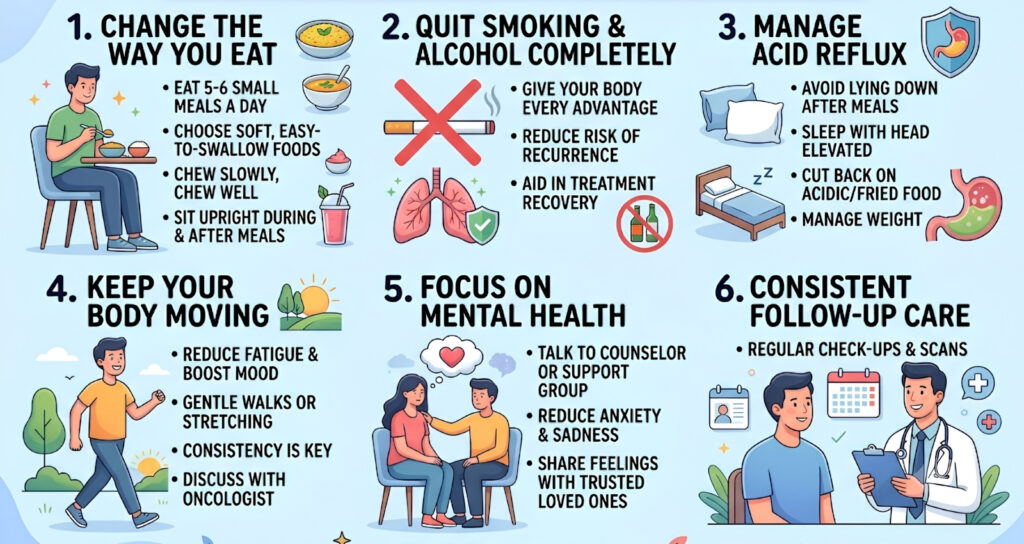
1. Change the Way You Eat
This is the most important adjustment you’ll make. Swallowing can become uncomfortable during and after treatment, so how you eat needs to evolve.
- Eat 5 to 6 small meals a day instead of 3 large ones
- Choose soft, easy-to-swallow foods — khichdi, dal, soft roti soaked in dal, blended soups, and smoothies work well
- Sit upright during meals and stay that way for at least 30–45 minutes after eating
- Chew slowly — there’s no need to rush
- Avoid spicy, very hot, or acidic foods that can irritate your food pipe
If you’re struggling to eat enough, a cancer-specialist nutritionist can tailor a plan specifically for you.
2. Stop Smoking and Alcohol — Completely
Both smoking and alcohol are directly linked to esophageal cancer. Continuing either one can interfere with treatment, slow your recovery, and raise the risk of recurrence.
This isn’t about guilt; it’s about giving your body every possible advantage. If quitting feels difficult (which it often does), speak openly with your doctor. There are programmes and support systems that make it easier.
3. Take Acid Reflux Seriously
Chronic acid reflux, when stomach acid flows back up into the food pipe, is a known risk factor for esophageal cancer. After diagnosis, keeping it under control becomes even more critical.
A few habits that genuinely help:
- Don’t lie down immediately after meals
- Sleep with your head slightly elevated
- Cut back on tea, coffee, carbonated drinks, and fatty or fried food
These small daily adjustments can reduce discomfort significantly and protect the lining of your esophagus.
4. Keep Your Body Moving
You don’t need intense workouts. Gentle, consistent movement — short walks, light stretching, or breathing exercises- can reduce fatigue, lift your mood, and support recovery in meaningful ways.
Even 15–20 minutes of movement a day adds up over time. Just make sure to check with your oncologist before starting any new physical activity.
5. Don’t Neglect Your Mental Health
Esophageal cancer doesn’t just affect the body — it takes an emotional toll too. Anxiety, sadness, and exhaustion are completely normal responses to a diagnosis like this.
Talk to a counsellor, join a support group, or simply open up to someone you trust. Many cancer care centres in Ahmedabad now offer mental health and emotional support as part of a holistic treatment plan, and patients who use these services genuinely cope better.
6. Never Skip Follow-Up Appointments
Lifestyle changes are powerful, but they work hand-in-hand with your medical treatment. Regular check-ups, blood tests, and imaging scans help your doctor monitor your progress and catch any changes early.
Even when you’re feeling better, show up. Consistency in follow-up care is non-negotiable.
What an Expert Opinion Says
Dr. Viraj Lavingia, a highly regarded oncologist in Ahmedabad with extensive experience in treating esophageal cancer, firmly believes that lifestyle changes are not just supportive; they are part of the treatment itself. He often tells his patients that those who actively improve their diet, quit smoking, manage reflux, and stay emotionally grounded tend to respond better to treatment and recover more confidently.
Healing Is a Journey, Not a Single Step
An esophageal cancer diagnosis changes a lot of things. But it also opens a door, a chance to build habits that genuinely support your health, your treatment, and your overall wellbeing.
Take it one step at a time. Lean on the people around you. Work closely with your medical team. And trust that small, consistent changes lead somewhere meaningful.