What Is MSI-High Cancer, and Why Does It Change Everything About Your Treatment?
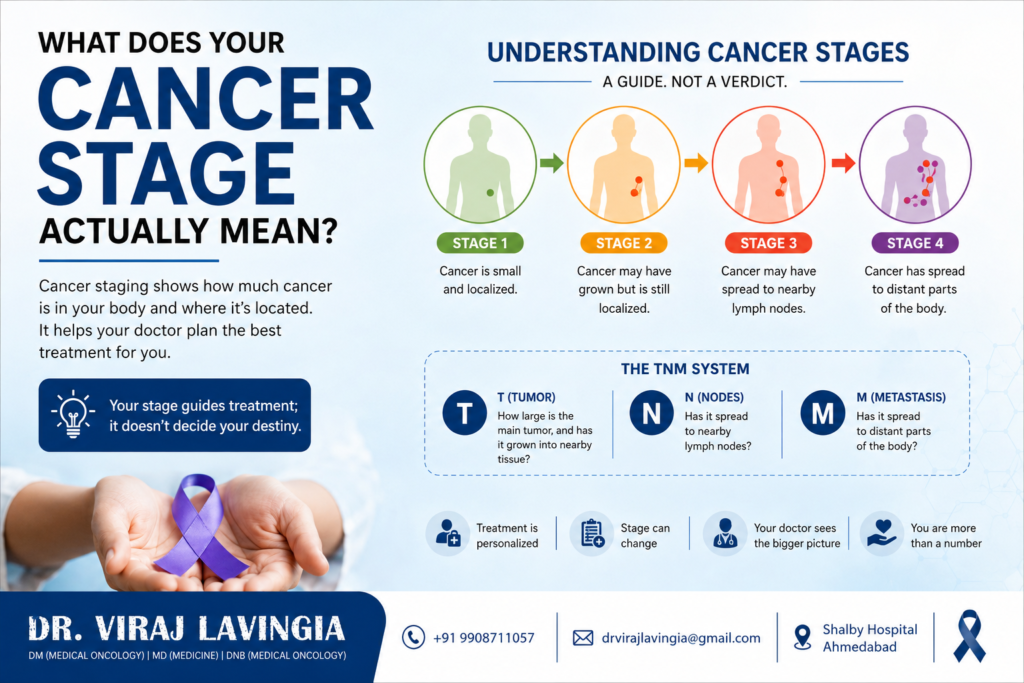
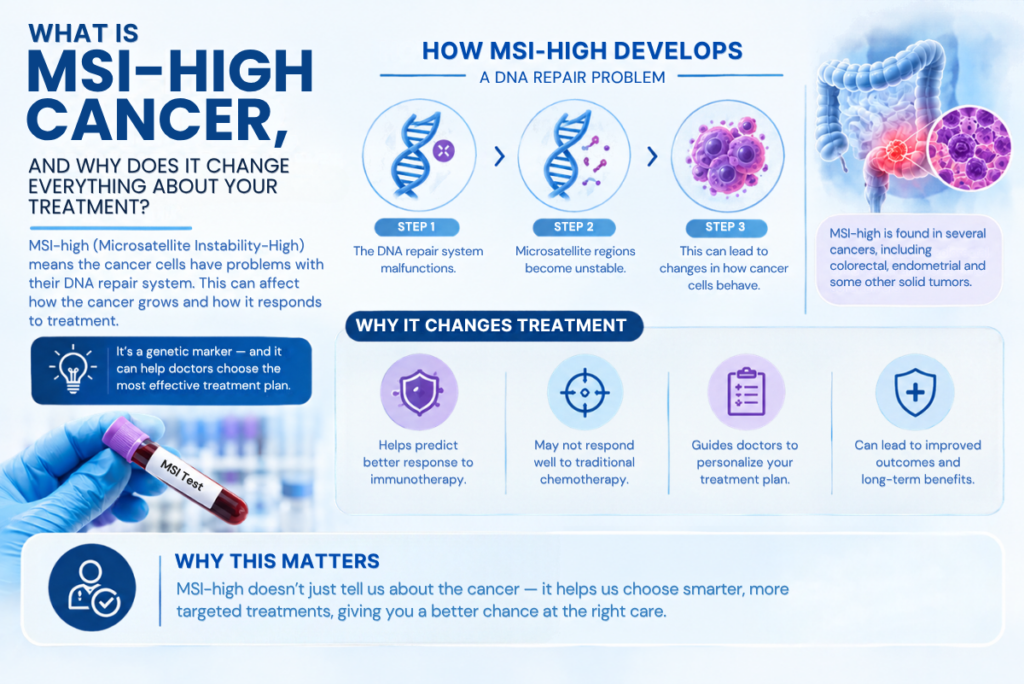
What Is MSI-High Cancer, and Why Does It Change Everything About Your Treatment? For a long time, hearing “stage 4 cancer” felt like a final verdict. Once cancer had spread to organs like the liver or lungs, doctors mostly aimed to control it for as long as possible. That picture is slowly changing, and one of the biggest reasons is a biological feature called MSI-high. Dr Viraj Lavingia, who treats gastrointestinal cancers, explains why this single test can shape an entire treatment plan. The “Typo” Idea: What MSI-High Really Means Think of your cells as fast typists. Every time a cell divides, it copies a huge instruction manual of DNA, about 3 billion letters long. With that much typing, a few mistakes are natural. Healthy cells have a built-in spell-check team called mismatch repair. It scans the freshly copied DNA, spots the typos and fixes them straight away. In some tumours, this spell-check team is missing or broken. Doctors call this mismatch repair deficiency. Without it, thousands of typos pile up in repeating stretches of DNA known as microsatellites. When that happens, the tumour is labelled MSI-high, short for microsatellite instability-high. It sounds like bad news, but here is the twist. Because the tumour is full of errors, it looks strange and “foreign” to your body. That turns out to be its biggest weakness. Why Immunotherapy Works So Well Here Your immune system has soldier cells, called T-cells, whose job is to attack abnormal cells. Many tumours survive by showing a “fake ID” that puts these soldiers to sleep. Immunotherapy removes that fake ID. The T-cells wake up and go after the tumour. Since MSI-high tumours already look so unusual, the immune system reacts to them strongly. What the Research Shows Two studies, both published in a leading medical journal, get a lot of attention: KEYNOTE-177 trial (stage 4 colorectal cancer): Standard chemotherapy gave a median survival of around 36 months. Immunotherapy as the first treatment raised this to about 78 months. More than half of the patients on immunotherapy were alive at five years, and many had long-lasting responses. Dostarlimab study (localised rectal cancer): In this small study of patients with dMMR tumours, everyone who received the drug had a complete clinical response. Their tumours could no longer be seen, and they were able to avoid chemotherapy, radiation and surgery. These results are remarkable. Still, they apply to a specific group of patients, and the dostarlimab study was small. Your own doctor is the right person to say what applies to you. How Is MSI Status Checked? The test is simple and routine. It uses a small piece of tumour tissue from a biopsy or surgery, and no extra procedure is needed if the sample already exists. There are two main methods: IHC (immunohistochemistry): A special stain examined under a microscope. It checks four spell-checker proteins. If one or more are missing, the tumour is called “mismatch repair deficient”. PCR or NGS (next-generation sequencing): A molecular test that counts the typos in the microsatellite regions to confirm whether the tumour is MSI-high. Two Facts Worth Remembering Not every tumour is MSI-high. About 15% of early colorectal cancers are MSI-high, but only around 4 to 5% of stage 4 colon cancers are. It is also seen in some stomach, uterine, and pancreatic cancers. Since you can’t guess it from symptoms or scans, testing early matters. Stage 4 is not one-size-fits-all. Stage tells us where the cancer is. It doesn’t tell us how it behaves. Two people with stage 4 disease can have very different outlooks, depending on the biology of their tumours. An MSI-high tumour follows a different path from a non-MSI-high one, because doctors have more precise tools to treat it. My Analytical Take The bigger lesson here is about asking better questions. Families often focus on the stage of cancer and the choice of hospital. Both matter. But biomarker testing can matter just as much, because it decides which treatment is likely to work best. A short conversation with your oncologist about testing can open doors that older, one-size-fits-all approaches never did. Knowing your tumour’s biology is quickly becoming part of good cancer care, not an optional extra. The Bottom Line A cancer stage describes where the disease is, not what your future holds. With precise testing, doctors can now match the right treatment to the right tumour. For some people with MSI-high cancer, that means long-term control and, in select cases, cure. As Dr. Viraj Lavingia emphasizes, if you or someone in your family is facing an advanced cancer diagnosis, ask about MSI testing early. It is a small step that can make a big difference.
What Is MSI-High Cancer, and Why Does It Change Everything About Your Treatment? Read More »