
Is Chemotherapy Really "Poison"? Here's What It Actually Does
If you picture chemotherapy the way it’s shown in old movies, a frail, bald patient hooked to a drip, visibly wasting away, you’re not alone. That image has stuck in the public mind for decades. And it’s exactly why so many patients sit in a clinic, newly diagnosed, and quietly wonder: is this treatment even worth it?
As a practicing Medical Oncologist, Dr. Viraj Lavingia hears this fear constantly.
If Surgery Removed the Tumor, Why Do You Still Need Chemotherapy?
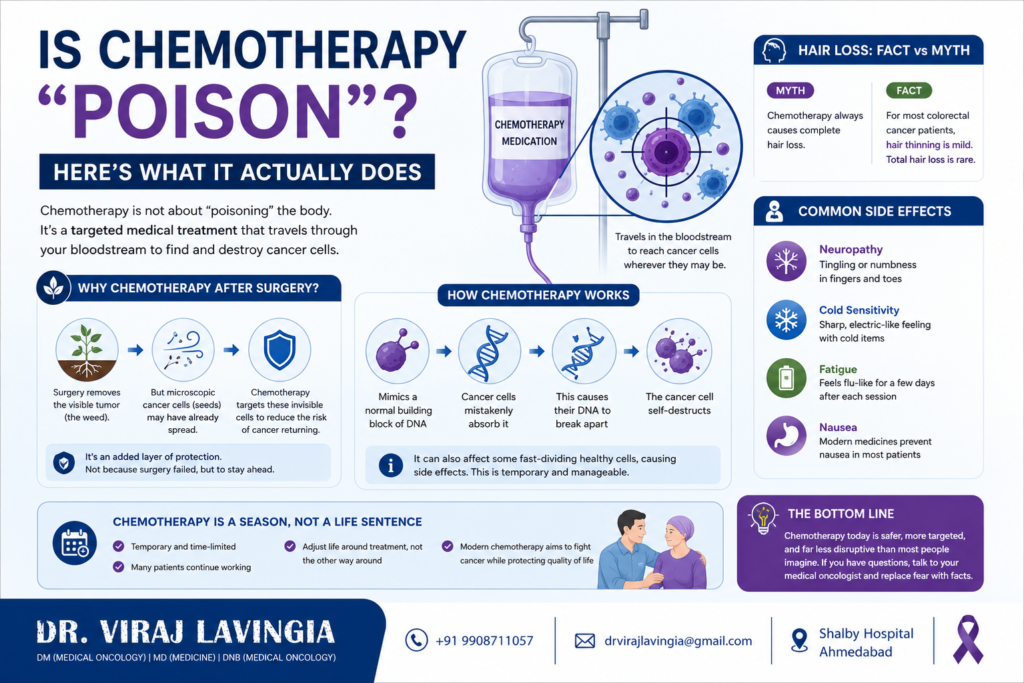
Imagine pulling a weed out of your garden by the stem. The main weed is gone, but before you pulled it, the wind may have already scattered a few tiny seeds across the lawn. You can’t see them. The yard looks clean. But if left untreated, those seeds take root, and the weeds return.
Cancer can behave the same way. A tumor may shed microscopic cells into the bloodstream, cells far too small for any CT scan or MRI to detect. Left alone, they can eventually settle elsewhere in the body.
Surgery works like a precise, targeted strike; it removes what’s visible. Chemotherapy works differently: it travels through the bloodstream, searching the entire body for those invisible remaining cells. When it’s used after surgery to lower the risk of relapse, doctors call this adjuvant chemotherapy, essentially, an added layer of protection.
So, How Does Chemotherapy Actually Work?
For colorectal cancer, treatment usually isn’t a single drug; it’s a carefully chosen combination, often referred to by names like FOLFOX or CAPOX.
The backbone of many of these combinations is a drug that works through a clever bit of biochemical trickery:
- It mimics a normal building block of DNA
- Cancer cells, dividing rapidly, mistakenly absorb it
- This causes their DNA to break apart, leading the cell to self-destruct
Chemotherapy isn’t selective enough to tell a fast-dividing cancer cell apart from a fast-dividing healthy cell, like those in your hair follicles, stomach lining, or blood cells. That overlap is where most side effects come from.
Why Does Chemotherapy Cause Hair Loss and Does It Happen to Everyone?
This is one of the biggest myths worth addressing directly: complete hair loss is not the reality for most colorectal cancer patients.
The specific drug combinations commonly used for GI cancers typically cause, at most, mild thinning, not the total baldness shown in films. Most patients don’t need wigs, and most people around them wouldn’t even know they’re undergoing treatment.
That said, other side effects are more common, though manageable:
- Neuropathy: Tingling or numbness in fingers and toes
- Cold sensitivity: A sharp, electric-like feeling when touching something cold, even a glass of ice water
- Fatigue: A few days of feeling flu-like and drained after each session
A Cancer Specialist will usually prepare patients for these in advance, simple adjustments like drinking room-temperature water or wearing gloves in cold weather make a real difference.
What About Nausea?
This is where modern oncology has changed the most. Chemotherapy today is almost always paired with advanced anti-nausea medication that blocks nausea signals in the brain before treatment even begins.
For most patients, the realistic experience isn’t days of vomiting, it’s more like two or three days of feeling run-down, followed by a steady bounce-back.
Chemotherapy Is a Season, Not a Life Sentence
Perhaps the most reassuring shift in perspective is this: chemotherapy is temporary. It’s demanding, and it does take a toll, but it’s a phase, not a permanent state.
Many patients continue working through treatment, adjusting their schedule around sessions rather than putting life on hold entirely. The goal of modern chemotherapy isn’t just to fight cancer, it’s to do so while protecting quality of life as much as possible.
The Bottom Line
Chemotherapy in 2026 looks very different from the image most people carry in their heads. It’s more targeted, better supported by side-effect management, and far less disruptive to daily life than decades-old portrayals suggest.
If you or a loved one has questions about what to expect from chemotherapy, speaking directly with an experienced Medical Oncologist can help replace fear with a clear, realistic picture of what lies ahead.
YOUTUBE VIDEO
The Truth About Chemotherapy: Debunking the Myths of “Poison” & Hair Loss