
Why Is Colorectal Cancer Increasing Among Young Adults?
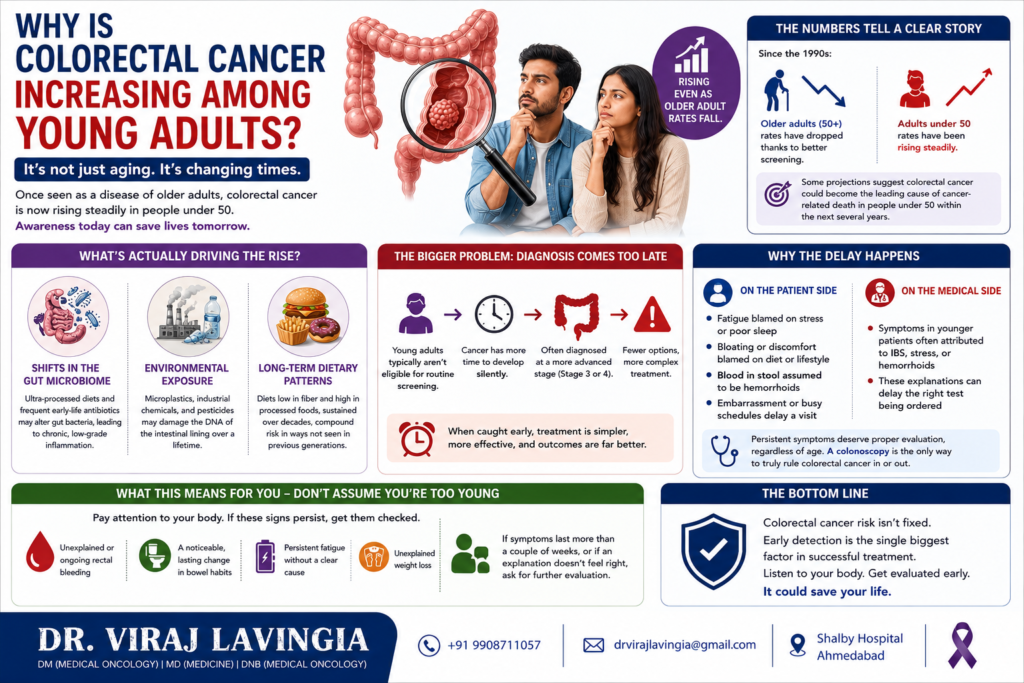
For decades, colorectal cancer was considered a disease of aging something to start worrying about after 50. That assumption is no longer safe to make. Rates among adults under 50 have been climbing steadily for years, even as rates among older adults have fallen thanks to better screening.
Dr. Viraj Lavingia has watched this shift firsthand in clinic: clinically fit, health-conscious people in their 30s and 40s being diagnosed with advanced-stage colorectal cancer, often after months of symptoms being dismissed as something else entirely. Understanding why this is happening is the first step toward catching it earlier.
The Numbers Tell a Clear Story
Since the 1990s, colorectal cancer rates among older adults have dropped meaningfully, largely due to widespread colonoscopy screening. But over the same period, rates among adults under 50 have been rising steadily. Some projections suggest colorectal cancer could become the leading cause of cancer-related death in people under 50 within the next several years.
This isn’t a statistical blip. It reflects a real shift in how and in whom this disease is developing.
What's Actually Driving the Rise
Researchers point to a combination of factors that have changed significantly over the past three to four decades:
- Shifts in the gut microbiome. Generations raised largely on ultra-processed diets, combined with frequent childhood use of broad-spectrum antibiotics, appear to have altered gut bacteria in ways that create chronic, low-grade inflammation, a known contributor to colorectal cancer risk.
- Environmental exposure. Ongoing exposure to microplastics, persistent industrial chemicals, and agricultural pesticides in food and water may be affecting the DNA of the intestinal lining over a lifetime, starting from a young age.
- Long-term dietary patterns. Diets consistently low in fiber and high in processed foods, sustained over decades rather than years, compound risk in ways not seen in previous generations.
The Bigger Problem: Diagnosis Comes Too Late
Rising incidence is only part of the concern. The bigger issue is timing. When an older adult develops colorectal cancer, it’s often caught early because routine screening is already in place. Younger adults typically aren’t eligible for routine screening, so the disease often has more time to progress before anyone thinks to look for it.
By the time a diagnosis is made in someone in their 30s, the cancer has frequently reached a more advanced stage,e often stage 3 or 4, simply because nobody was looking for it sooner.
Why the Delay Happens
Two patterns tend to contribute to late diagnosis in younger patients.
On the patient side:
- Fatigue gets blamed on work stress or poor sleep
- Abdominal discomfort gets attributed to diet or a stressful lifestyle
- Blood in the stool gets assumed to be hemorrhoids, especially in physically active people
- Embarrassment or busy schedules delay a visit to the doctor altogether
On the medical side: Younger patients presenting with symptoms like changing bowel habits or rectal bleeding are sometimes told it’s irritable bowel syndrome, stress, or simple hemorrhoids explanations that are often reasonable, but that can also delay the right test being ordered if symptoms persist.
Dr. Viraj Lavingia emphasizes that persistent symptoms deserve proper evaluation regardless of age. A colonoscopy is the only way to truly rule colorectal cancer in or out, and age alone shouldn’t be the deciding factor in whether one is recommended.
What This Means for You
Age can no longer be treated as automatic protection. If you’re under 50, it’s worth paying closer attention to your body rather than assuming you’re too young to be at risk. Signs worth taking seriously, especially if they persist, include:
- Unexplained or ongoing rectal bleeding
- A noticeable, lasting change in bowel habits
- Persistent fatigue without a clear cause
- Unexplained weight loss
If a symptom continues for more than a couple of weeks, or if an explanation offered doesn’t quite add up, it’s reasonable to ask directly for further evaluation rather than accepting the first explanation given.
Early detection remains the single biggest factor in successful treatment outcomes. The earlier colorectal cancer is caught, at any age, the more treatment options are available and the better the long-term outlook tends to be.